Braylon Ellis And Andrew Tatum Keep Hooping Through Challenges
Athletes with Type 1 diabetes (T1D) face a unique set of challenges as they strive to balance the demands of their sport with managing their condition. In 2018, Braylon Ellis and Andrew Tatum were both in sixth grade starting their middle school basketball careers while facing the challenge of having diabetes. Now, six years later in their senior season, the two revisit what it means to a high school athlete to deal with the illness.
T1D is an autoimmune disease in which the body’s immune system attacks insulin-producing cells in the pancreas, requiring individuals to manage their blood sugar levels with insulin therapy. For athletes, this adds layers of complexity to their training, competition and recovery. Ellis was diagnosed at 3-years-old. Along with basketball, he is on the high school bass fishing team. Tatum was diagnosed at 11-years-old and also plays baseball. Both were diagnosed after complaining of constant thirst.
One of the most significant challenges for athletes with T1D is maintaining stable blood glucose levels. Physical activity can cause blood sugar levels to fluctuate unpredictably. Intense exercise can lead to hypoglycemia (low blood sugar) as muscles absorb glucose from the bloodstream, while stress or certain types of exercise, such as weightlifting, may trigger hyperglycemia (high blood sugar) due to the release of stress hormones like adrenaline and cortisol.
“I really watch my sugars really close and knowing what I can and can’t eat before games or practices,” said Tatum. “Over the years I’ve had to learn how different types of food effect my sugars and how long it takes for insulin to do its job.”
This dual risk requires constant monitoring and adjustments. Changes in technology have helped diabetics better monitor the fluctuation in their glucose. Finger pricks are rare now and bluetooth monitors not only give faster results but alert when levels move out of a safe range.

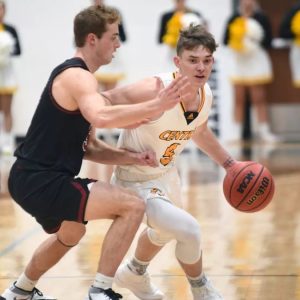
Braylon Ellis and Andrew Tatum are now in their senior season and years of experience and advances in technology have helped the pair keep their Type 1 diabetes under control. (The Harrodsburg Herald/April Ellis)
Athletes with T1D must frequently monitor their blood sugar levels before, during, and after exercise. Advances in continuous glucose monitoring (CGM) devices have made this easier, but these devices still require careful attention and interpretation. Athletes need to make real-time decisions about insulin dosing, carbohydrate intake, and hydration to avoid performance-impairing blood sugar extremes. The two have always had help with their diabetes while on the court. The team managers from middle school through high school learned to monitor glucose readings to make sure both boys stayed in safe ranges and made corrections when they weren’t.
“Advancement in how I read my blood sugar has made playing sports and keeping my levels balanced a lot easier. The Dexcom G7 has been a huge change that has helped me read my blood sugar levels faster and more efficient,” said Ellis. “Instead of running and pricking my sweaty finger during games, I have a patch on my back that I can check with my phone that tells me live readings of my blood sugar.”
While it effects the two players, it has become a team effort over the years. Growing up teammates learned to recognize potential problems and go for snacks before it became an issue. From middle school to high school, the student managers have also learned how to monitor the pairs glucose levels and what to do.
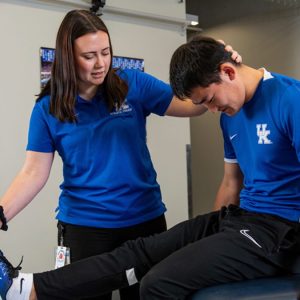
“I do not know what I would do without our managers and Cat, our athletic trainer,” said Tatum. “While I’m practicing or playing Cat keeps my phone and keeps a close watch on my bloodsugar. The managers always have a Gatorade and bottle of water ready for when I need it. I am very grateful to have such great managers and a awesome athletic trainer that keep a close watch on me and my blood sugars. I do not know what I would do without them on game days. I am very thankful for them and how much they care.”
Exercising with T1D carries the risk of both short- and long-term complications. Hypoglycemia during training or competition can lead to dizziness, confusion, or even loss of consciousness, which can be dangerous in certain sports environments. On the other hand, consistently high blood sugar levels may increase the risk of dehydration, slower recovery times, and long-term complications such as cardiovascular issues.
There can also be a mental toll of managing T1D as an athlete. Vigilance is required to balance blood sugar levels. Athletes may fear the consequences of poor blood sugar control, such as underperforming.
“Over the years, I have been able to keep under control for the most part. There are still some days where it is harder to keep under control than others based on what I’m doing on those days,” said Ellis.
Athletes with T1D often face additional challenges in recovery. High blood sugar levels post-exercise can impair muscle repair and glycogen replenishment, while low levels can make it difficult to regain energy. The unpredictability of blood sugar responses to different types and intensities of exercise can make it hard to optimize training plans.
Over the years, Tatum has figured out what his routine needs to be so that he is game ready. “When its game day, I usually try to start preparing for the game the night before,” he said. “I drink a lot of water leading up to the game and then eat a high protein and medium carb meal an hour to an hour and half before the game. Right before the game I drink a Pedialyte to make sure I stay hydrated.”
Ellis echoes the thought, noting care has to be taken leading up to games to making sure he has the right amount of sugar at the right time.
“On days that I play basketball, I typically don’t eat two hours before the game so my number doesn’t go up and down, I typically try to keep it at a certain level before games and practices,” said Ellis.